Meta does not want your regular WhatsApp account running bots. Try it anyway and you usually wake up to a banned number. That is the wall Ariel is talking about in this video — and then he walks straight around it.
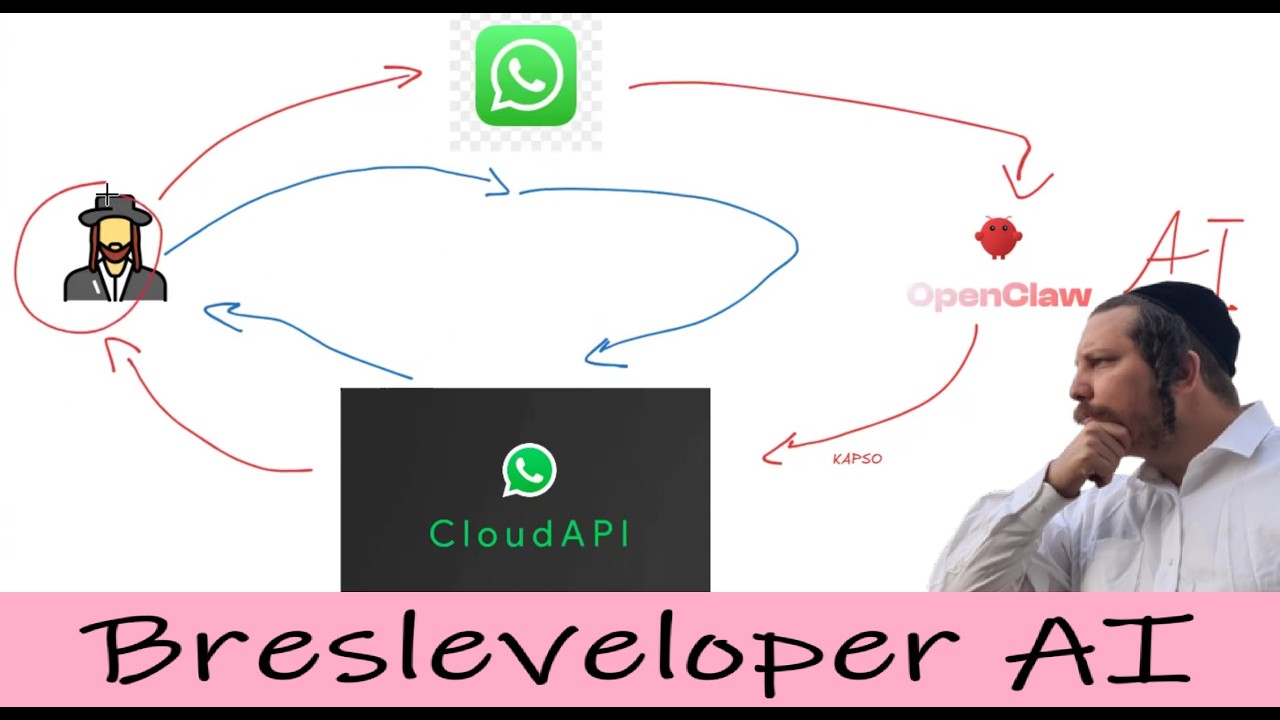
The demo shows a self-hosted AI agent that listens to a normal WhatsApp account, understands incoming messages, and answers back through the official WhatsApp API. Same conversation, two doors: regular WhatsApp in, official WhatsApp out.
What the setup actually does
Ariel’s goal is simple: someone sends a message to a regular WhatsApp number, and an AI replies without the owner typing a word. The trick is doing it without putting the regular account at risk.
The flow looks like this:
- A message lands on a regular WhatsApp account. This is the consumer app most people already have.
- An AI agent on a private server reads it. In this demo the agent runs on Open-Interpreter, but the architecture matters more than the brand.
- The agent forms a reply and sends it through the official WhatsApp API. Ariel uses Callmebot as the API provider, but the same idea works with Kapso, Green API, or any other sanctioned WhatsApp Business gateway.
- The sender gets the answer on their own WhatsApp, exactly as if a human had typed it.
The agent also echoes back the original message first — “You sent me: …” — so the user sees the context before the actual answer.
Why this is different from a normal bot
Most WhatsApp bot tutorials either:
- Beg for Meta’s blessing and a Business API account, or
- Sneak around with unofficial libraries and hope the account survives.
This setup splits the difference. The sensitive read side uses the regular WhatsApp account, but only to receive. The risky send side uses the official API, where outbound messaging is allowed and metered. You are not blasting spam from a personal number; you are routing one-to-one replies through a channel Meta already accepts.
In the demo, Ariel uses a Ukrainian SIM as the regular number and shows the same questions appearing in two places at once: inside the regular WhatsApp conversation and inside the official WhatsApp API dashboard. The AI is the bridge.
What it unlocks
Because the agent lives on your own server, you control:
- Personality and tone per contact or per phone number.
- Permissions — who can trigger what, and which messages get answered automatically.
- Connections to other channels like email, Discord, or internal systems.
- Group awareness — the agent can see group chatter, something the official API makes difficult.
You keep your existing WhatsApp for friends, family, and suppliers, while a controlled AI handles repetitive replies on your behalf.
🔥 Roast Corner
Let’s not pretend this is plug-and-play. The diagram in the video is a jungle of arrows for a reason: regular WhatsApp was never designed to be a bot API, and every workaround is a workaround.
The consumer WhatsApp account is still doing something Meta does not like. Even if you only read messages, keeping a linked session alive for an agent is fragile. One Terms-of-Service change, one detection tweak, and the bridge collapses.
Also, “I used Callmebot, but it could be Green API or whatever” is a warning dressed as flexibility. Each provider has different pricing, message limits, registration rules, and support quality. “Whatever” is not a production architecture; it is a weekend project.
The real friction is not technical. It is policy. As long as Meta owns the WhatsApp protocol, every clever bypass lives on borrowed time.
🤖 AI for Humans
Think of your phone like a receptionist. Right now, that receptionist is you: every WhatsApp ping interrupts your day, even when the answer is obvious.
Ariel’s setup is like hiring a second receptionist who:
- Listens to what people ask through the front door (regular WhatsApp).
- Decides what to say using rules and AI you control.
- Sends the answer through the approved back door (official WhatsApp API).
You do not become a programmer. You do not wait for Meta’s approval on your personal account. You keep the human channel open while the agent handles the repetitive traffic.
The catch is still there: the front door is not really supposed to be automated. But for small businesses, support desks, or anyone drowning in routine WhatsApp questions, it is a practical middle ground between “do everything manually” and “pray your account does not get banned.”
💬 Comments